
Everything you need to know about the CE label on traffic signs

Everything you need to know about the CE label on traffic signs

Every traffic sign you see along a public road should have a CE label. This small label may not be very noticeable, but it plays an important role in the safety and reliability of our infrastructure. In this article, we explain what the CE label means, why it is mandatory and who is responsible for applying and checking.
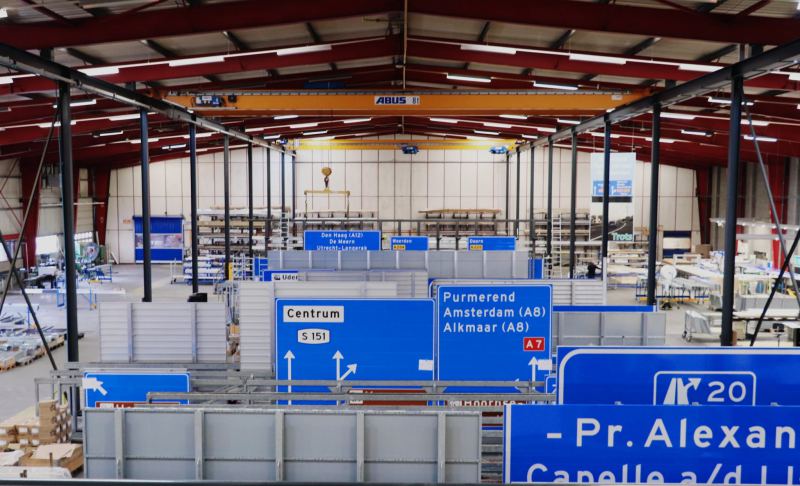
 

What is a CE label?

The CE label (Conformité Européenne) indicates that a traffic sign complies with European standards for safety and quality. Two important standards apply to traffic signs:

  • NEN 12899: for static sign (such as RVV signs)
  • NEN 12966: for variable-message signs (such as matrix signs)

All signs installed along public roads are legally required to carry a CE label referring to these standards. The label contains, among other things, information about:

  • CE symbol
  • Name or logo of the manufacturer
  • Number and year of the relevant European standard
  • All information on the product or packaging
  • Product type identification
  • Registered address of the manufacturer
  • Last two digits of the year in which the product was manufactured
  • Reference to the certification body and the number of the EC Certificate of Conformity
  • Identification of the product characteristics

This information makes it clear which requirements the sign complies with and what its technical service life is.

Your responsibility regarding CE marking

The manufacturer of the sign is responsible for correctly applying the CE label. However, the road authority, such as a municipality, province or Rijkswaterstaat, also have a role to play: they are responsible for installing signs that meet all legal requirements, including CE marking. Therefore, the sign should be checked before it is installed.

What if the sign does not have a CE label?

A traffic sign without CE marking does not comply with European regulations. In that case, the sign is legally invalid and installing it may even be considered as economic offence. In addition, the quality or durability of the sign is not guaranteed, which poses risks to road safety.

Inspection and supervision

Whether a manufacturer is authorised to apply CE labels is verified by a so-called notified body. In AGMI's case, this is SGS, which conducts an annual audit of the production process. CE labels may only be used if the production process meets all requirements.

Road authorities are then responsible for checking that the correct signs (with valid CE marking) have actually been installed.

CE label: small but essential

The CE label is more than an administrative detail: it is essential proof of quality, safety and compliance with European standard. Every RVV and directional sign on public roads must carry this marking and rightly so. Without CE marking, you simply cannot know whether the sign is reliable.

Need help with CE-certified signs?

AGMI supplies traffic signs that meet the highest standards, including valid CE marking and full traceability. Want to make sure your project meets all requirements?

How can we help you move forward?

Get in touch with us, we'll be happy to help