

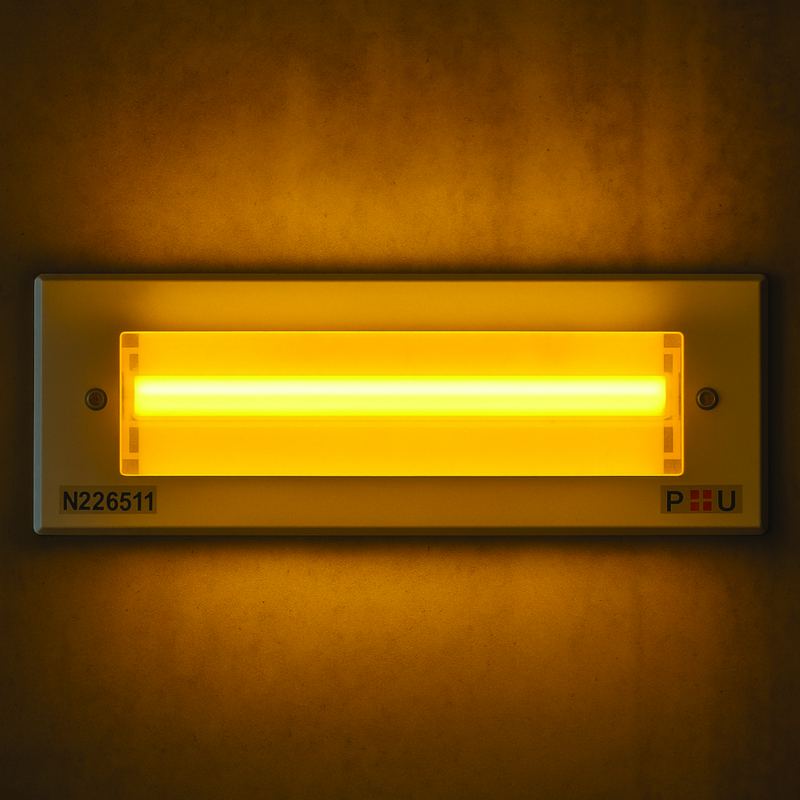
As the days grow shorter, road authoritie face a greater need for artificial lighting in tunnels and underpasses. Cyclists and pedestrians rely on good lighting to feel safe, especially during the darker months. Many smaller tunnels and underpasses still use familiar AGMI F3-NS luminaire (230V/50Hz, 1x24W fluorescent). Increasingly, the questions we receive are not about replacing these luminaires, but about upgrading them to an LED alternative: reducing energy consumption and maintenance costs while just as importantly, improving the quality of lighting.
The days are getting shorter: does the tunnel in your municipality still feel safe
Why light intensity isn't the whole story
A tunnel or underpass can meet its required lux levels on paper and still feel unsafe. This is often not due to insufficient light, but rather an uneven distribution of it. Dark spots, contrast differences at entrances and exits, or a few faulty fluorescent tubes can all affect how a space is perceived. The human eye responds strongly to differences in brightness, not just the average amount of light.
This is not merely an assumption; it is also supported by professional lighting guidance. The Dutch practical guideline for quality criteria in public lighting (NPR 1320, developed by NSVV and NEN) identifies uniformity alongside light intensity as key quality requirement, particularly in relation to social safety.
Municipal and provincial public lighting policies reflect this principle as well: dark spots within an otherwise illuminated area can create a sense of insecurity, while the spacing between luminaires plays an important role in achieving uniform lighting. The CROW Design Guide for Pedestrian Routes also highlights uniformity as an important factor in detecting obstacles in time and recommends avoiding abrupt transitions between lighting conditions.
A uniform light distribution, without sharp transitions between light and dark, therefore contributes demonstrably more to a feeling of safety than a higher peak light level in just one location.
What the AGMI LED alternative offers
More uniform light distribution from the module itself
The LED module (560m) features 96 LEDs and has an adjustable operating current ranging from 150 to 1250 mA. At the standard setting of 700mA, one module delivers 4350 lumens with an efficiency of 182 lm/W. This can be increased to 7310 lumens per module at maximum output. Multiple modules can be combined (1 to 4 per luminaire) to tailor the light output to the length and layout of the underpass,
Flexible colour temperature
The standard colour temperature is 4000k, with optional settings ranging from 2700k to 6500k. This allows the light colour to be adapted to the surrounding environment, for example by using warmer, less disruptive lighting in or near nature reserves.
Longer lifespan, less downtime
A minimum lifespan of 60000 operating hours (L70), with an operating temperature range of -40°C to +55°C and a 5-year manufacturer's warranty. This reduces the likelihood of individual light sources failing over time and creating uneven, inconsistent lighting conditions.
Retrofit into the existing impact-resistant housing
The LED module is installed inside the existing F3-NS luminaire (IK10), which is already suitable for locations prone to vandalism, such as pedestrian and cycle tunnels. The proven, impact-resistant housing remains intact; only the light source is replaced, without requiring any modifications to the existing structure.
Previously implemented: tunnel passage for the Province of Utrecht
The Province of Utrecht approached AGMI to develop a new LED lighting solution for a tunnel passage in a nature reserve. The requirements were clear: a sustainable solution that would blend in with the natural surroundings.
This demonstrates that an LED upgrade doesn't have to be a one-size-fits-all solutions. The adjustable colour temperature and modular design allow the lighting to be tailored to each location, from a busy cycle tunnel to an underpass in a sensitive natural environment.
What this means for road authorities
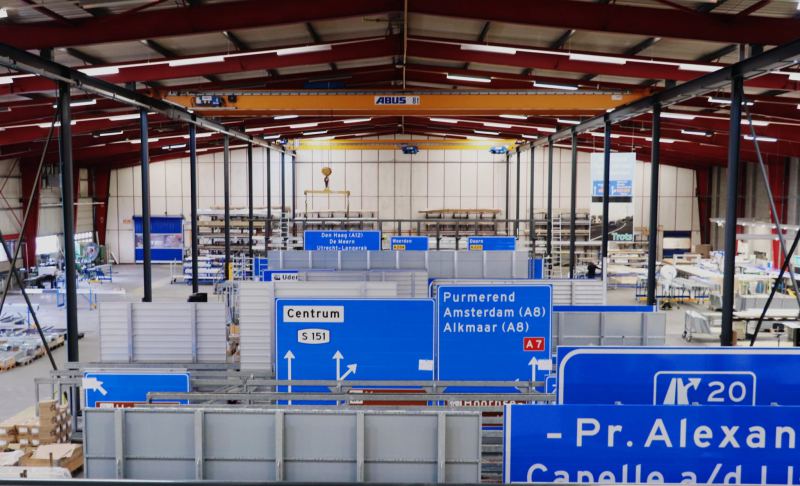
For smaller underpasses and cycle tunnels, this is often not a major project, but a targeted retrofit using the existing impact-resistant housing. AGMI designs, manufactures and installs these solutions in-house or onsite.
Would you like to replace the F3-NS luminaires in your municipality with the LED alternative? Contact us for a no-obligation quatation.
Sources: NPR 13201 (practical guideline for public lighting quality criteria, NSVV/NEN); CROW Design Guide for Pedestrian Routes, chapter on lighting.
Would you like to receive a no-obligations quotation or more information?
Please fill in the contact form below.