

Inland and recreational shipping make intensive use of Dutch waterways. With increasing traffic, larger vessels, and higher expectations for safety and smooth navigation, the importance of clear and properly placed nautical signs is growing. While signage was once applied primarily for functional purposes, it is now increasingly recognized as an essential part of professional waterway management.
Why Proper Nautical Signs Are Crucial for Safety and Professional Waterway Management
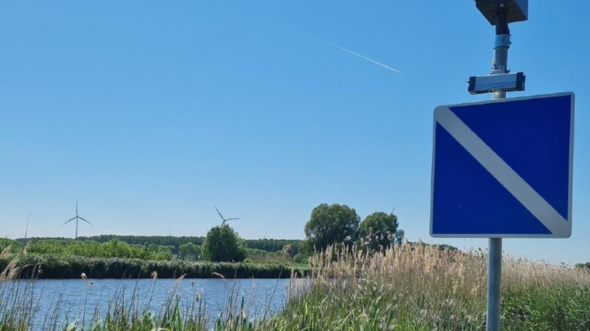
From Individual Signs to Structured Management
Waterway managers such as: municipalities, water boards, and port authorities—are increasingly taking a holistic approach. Key aspects include:
- Visibility and recognizability
- Lifespan and maintenance
- Uniformity across the waterway network
- Risks and liability
Properly applied nautical signs directly contribute to safety, predictability, and smooth traffic flow on the waterways.
Nautical Sign Guidelines as a Foundation
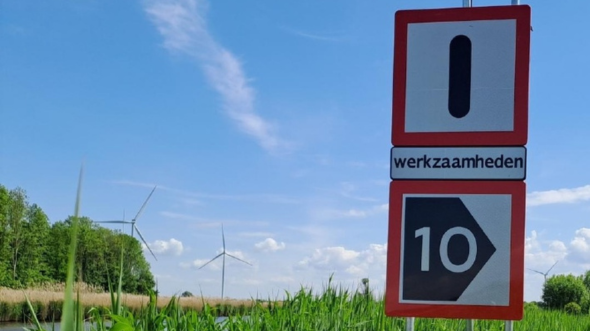
In the Netherlands, nautical signs are applied in accordance with the Nautical Sign Guidelines established by Rijkswaterstaat. These guidelines provide the national standard for the design, meaning, and application of nautical signs on inland waterways.
In practice, waterway managers are becoming increasingly conscious of these guidelines, paying more attention to proper application, maintenance, and replacement of signage. By addressing this proactively, future adjustments and unnecessary costs can be avoided.
Application in High-Risk and Busy Locations
Navigational signs are essential in areas where visibility and clear instructions are critical, such as:
- Locks and bridges
- Harbor entrances and berths
- Narrow waterways and sharp bends
- Intersections of commercial and recreational traffic
These signs provide information on navigation rules, speed limits, right-of-way, and prohibitions. In combination with signal lights and zoning signs, they ensure clear communication to vessel operators.
Recognizable Layout and Uniform Appearance
The layout and design of inland navigation signs are defined by the Inland Navigation Police Regulations (BPR) and the international CEVNI guidelines. These regulations ensure uniform and easily recognizable signage across waterways. The main categories are:
Mandatory Signs
Circular signs with a blue background and white symbols.
These signs indicate a required action or navigation direction.
Prohibition Signs
Circular signs with a white background, a red border, and a black symbol.
They indicate actions or situations that are not allowed.
Information Signs
Predominantly rectangular signs, usually in blue or white.
These signs provide information about waterways, facilities, or specific situations.
Warning Signs
Triangular signs with a yellow background, a red border, and a black symbol.
They warn of hazardous situations or special conditions.
Thanks to these standardized shapes and color combinations, skippers can quickly recognize and correctly interpret the signs, contributing to safety and smooth traffic flow on inland waterways.
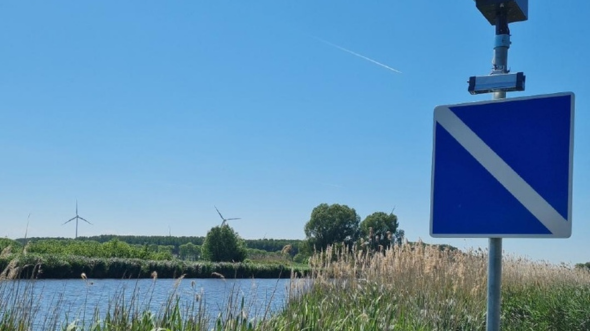
Visibility, Material, and Reflectivity
Navigation signs must be clearly visible in daylight, twilight, and darkness. Therefore, requirements apply to, among other things:
- Reflective properties
- Size and readability distance
- Choice of material and durability
Signs that are visibly worn or damaged may lose their effectiveness, posing a safety risk on the water.
Structures: An Indispensable Component
Not only the sign itself but also its supporting structure determines the effectiveness of navigation signage. Considerations include:
- Correct mounting heights above the water level
- Stability in wind and currents
- Minimal obstruction of sightlines
At locations such as locks and bridges, additional measures are required to ensure both safety and visibility.
Structures: An Indispensable Component
Not only the sign itself but also its supporting structure determines the effectiveness of navigation signage. Considerations include:
- Correct mounting heights above water level
- Stability in wind and currents
- Minimal obstruction of sightlines
At locations such as locks and bridges, additional measures are required to ensure both safety and visibility.
Aged Signage and Circular Solutions
When navigation signs no longer comply with current regulations or are visibly damaged, replacement is necessary. AGMI Re-Sign offers a circular production technique, allowing existing signs to be reused and rebuilt. This approach supports sustainable waterway management and helps reduce raw material consumption.
Complete Solutions for Navigation Signage
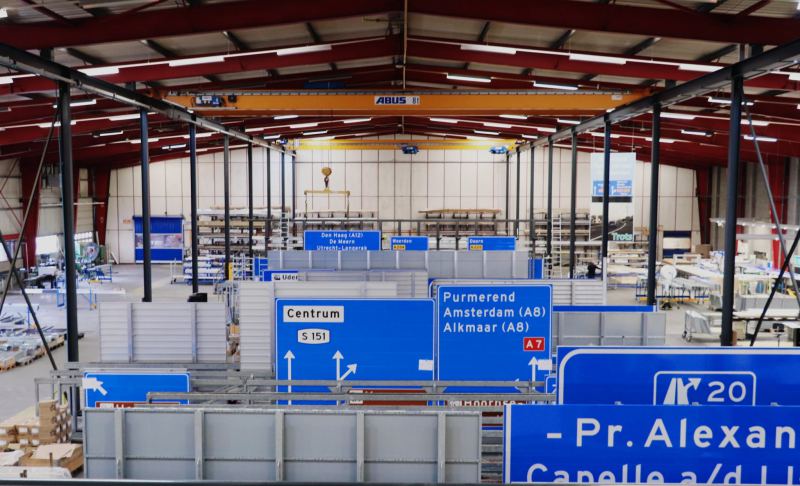
At AGMI, we design and produce navigation signs and supporting structures that comply with current regulations and meet the practical requirements of waterway managers—ranging from individual signs to complete projects.
In addition, we also supply:
- Zoning signs
- Safety and emergency route signs
- Supplementary signage for locks, bridges, and waterworks
Need Advice?
Are you responsible for the management, maintenance, or replacement of navigation signage? Or would you like insight into the condition of your current signs?
Feel free to contact us. We are happy to provide guidance and help ensure a safe, clear, and future-proof waterway network.