

As part of the Climate Agreement, the Netherlands is taking an important step toward cleaner transport with the introduction of zero-emission zones in 2025. These zones, where polluting vans and trucks are restricted, form a crucial part of the strategy to reduce greenhouse gas emissions. Municipalities play a central role in implementing these environmentally friendly measures. But what does this mean exactly for local authorities, and how can they prepare for the introduction of zero-emission zones?
Zero-emission zones in 2025: What should municipalities take into account?
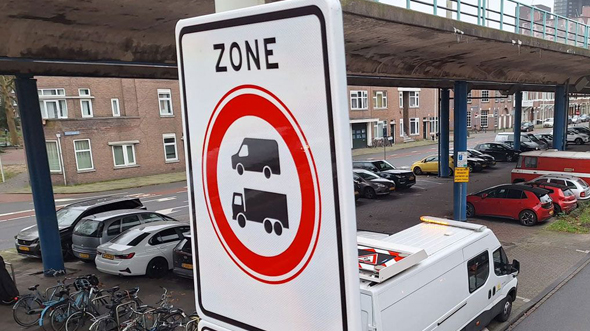
The impact of zero-emission zones on municipalities
From 2025, at least 30 Dutch cities will introduce zero-emission zones, restricting vans and trucks that emit harmful substances. This measure, part of the Climate Agreement, aims to reduce greenhouse gas emissions. Vehicles entering these zones must be fully electric or run on hydrogen. A transitional arrangement will apply for older vehicles: until the end of 2026, fuel-powered vans with emission class 5 or higher may enter the zones, and trucks until the end of 2029. From 2030 onward, all vehicles in these areas must be emission-free.
While this measure offers opportunities for a cleaner environment, it also brings challenges. Municipalities must take practical aspects into account, such as:
- Setting up enforcement checkpoints to monitor which vehicles enter the zones.
- Establishing a comprehensive network of charging stations and hydrogen refuelling points, both inside and on the edges of the zones.
- Informing entrepreneurs and residents through clear communication and awareness campaigns.
- Measuring and visualising the impact on CO₂ emissions and air quality within municipal boundaries.
- Clearly guiding road users with signage and wayfinding.
The introduction of zero-emission zones also brings significant advantages, such as improved air quality, reduced noise pollution, and the stimulation of innovation in the logistics sector. It could contribute to a reduction of approximately 1 megaton of CO₂ per year from 2030 onward, which is comparable to the emissions of all households in a city like The Hague.
Replacement and reuse of traffic signs when introducing zero-emission zones
Traffic signs play a key role in implementing zero-emission zones. Municipalities will need to replace existing environmental zone signs with new signs that clearly indicate where the zero-emission zones begin and which vehicles are allowed. These signs must meet specific requirements, such as uniform design, size, and reflectivity.
But what should be done with the old signs that are no longer needed?
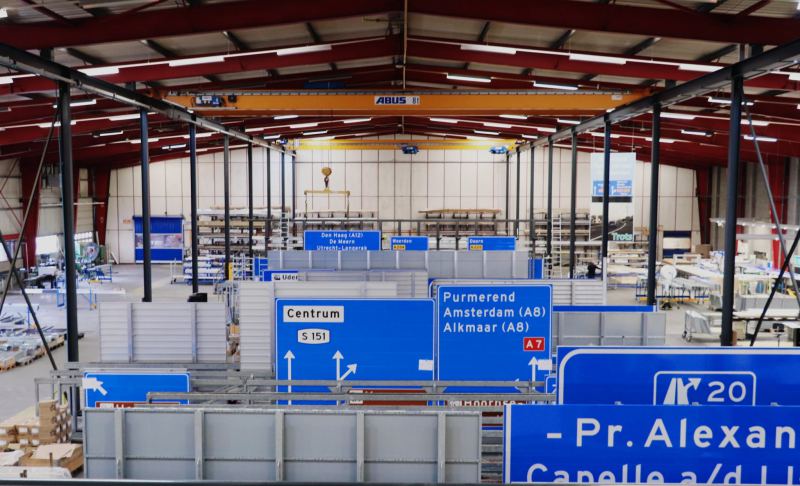
The answer is simple: AGMI Re-Sign. By collecting and returning old traffic signs to us, they can be recycled and reused, contributing to a circular economy. Municipalities can easily order new signs through the AGMI webshop and see which other relevant products are available. If certain signs are unavailable or if municipalities or contractors have specific questions, our product specialists are always available for further support.
Timely preparation is half the work
It is also important that municipalities plan and prepare the replacement and installation of new signs in advance. This prevents confusion and ensures that the rules are immediately clear to road users. By using solutions such as Re-Sign, municipalities can not only contribute to a cleaner environment but also save costs by reusing materials.
A joint step towards a sustainable future
The transition to zero-emission zones requires careful planning, but with additional circular solutions like AGMI Re-Sign, municipalities can contribute to a cleaner future — both in transport and in the reuse of materials. Together, we can take the step toward a more sustainable Netherlands.
Do you have any questions regarding zero-emission zones? Would you like to learn more about our solutions, or simply have an informal chat with our specialists? Leave your details below, and we will contact you within one business day.